This time we’re leaving Belfast: a quick trip to Derry
For this article, we’re making a little journey out of Belfast and heading northwest to Derry — a city with big character, steep streets, and a skyline shaped by history.
Derry city walls are among the city’s standout features: built in the early 1600s, they still form a walkable ring around the historic centre — one of the reasons Derry feels so “defined” when you visit. The city sits on the River Foyle, with the Cityside and Waterside facing each other across the water, stitched together by bridges (including the modern Peace Bridge).
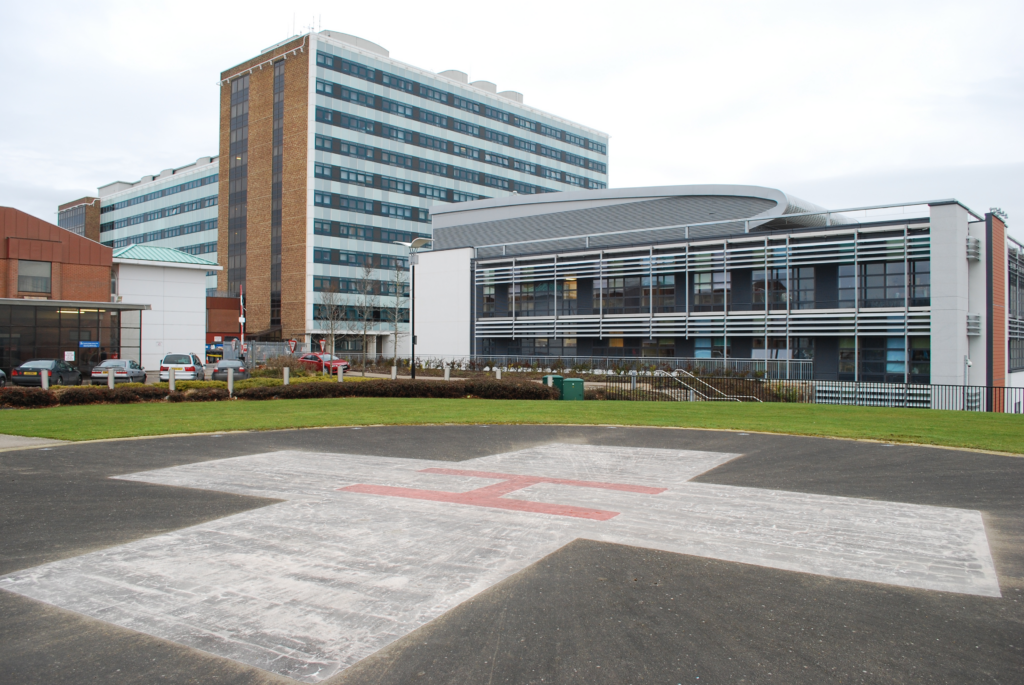
Altnagelvin Area Hospital: the North West’s main hospital
Altnagelvin Area Hospital is the key acute hospital for the North West, based in the Waterside area of the city and managed by the Western Health & Social Care Trust.
It provides a wide range of services — including a 24-hour A&E — and it’s also one of Northern Ireland’s designated cancer units. In terms of scale, the Trust lists 472 inpatient beds and 36 day-case beds, which gives you a sense of how much of the region’s day-to-day healthcare flows through this site.
A major part of the site’s modern identity is cancer care: the North West Cancer Centre opened on-site in November 2016 to provide radiotherapy closer to home for patients in the West/North West (including cross-border access for Donegal patients).
Quick facts
Opened: 1960
A&E: 24-hour Emergency Department
Beds (Trust figures): 472 inpatient + 36 day-case
Cancer services: designated cancer unit; radiotherapy services delivered via the North West Cancer Centre (opened Nov 2016)
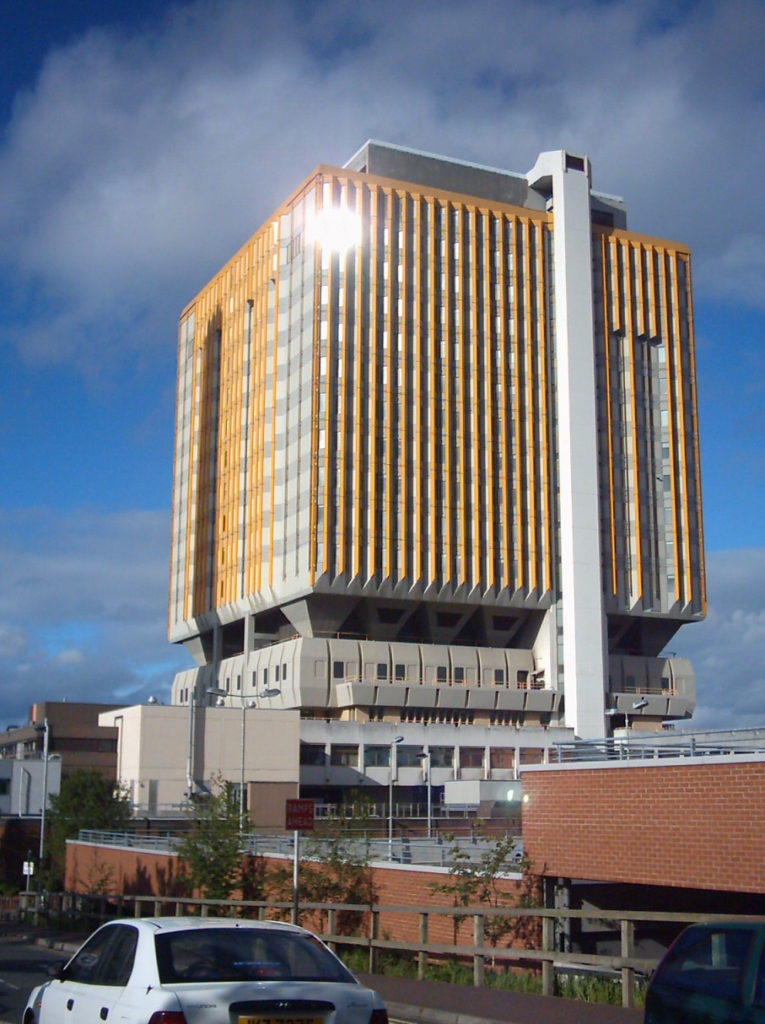
If you’ve ever walked or driven along the Lisburn Road, you’ve definitely seen it: Belfast City Hospital’s distinctive tower rising over south Belfast like a landmark you can navigate by. It’s not a “tourist attraction” in the usual sense, but it’s one of the city’s most important places — and (quietly) one of its most interesting.
Belfast City Hospital is a major university teaching hospital, part of the Belfast Health & Social Care Trust, and it plays a key regional role in areas like cancer and renal services.
Quick facts:
Where: 51 Lisburn Road, Belfast, BT9 7AB
Founded:1841 (with origins as the Belfast Union Workhouse & infirmary)
Beds: around 900
The tower:15 storeys, about 76 m tall, opened January 1986
Emergency department: the A&E closed in 2011, with emergency care directed elsewhere
Tucked into the leafy calm of Botanic Gardens, the Ulster Museum is where Belfast goes when it wants to tell a story – about dinosaurs and dragons, shipwrecks and civil rights, fashion and fossils, paintings and politics. It’s the largest museum in Northern Ireland, with around 8,000 m² of galleries filled with art, history and natural science.
Step outside and you’re in one of the nicest corners of the city:
Queen’s University Belfast (Lanyon Building) just across the road, all red brick and turrets.
Methodist College a few steps away, its students streaming past at lunchtime.
Botanic Gardens literally wrapped around the museum, so you can go from dinosaur skeletons straight to palm houses and rose beds.
It’s hard to beat that combo.
A Museum 200 Years in the Making
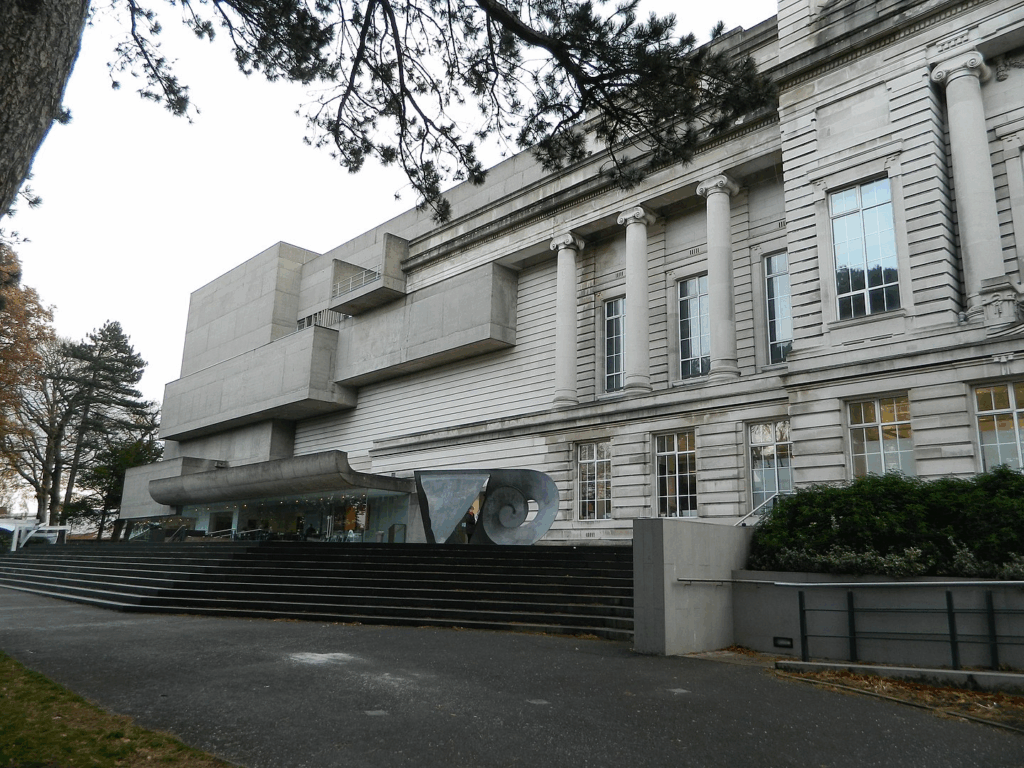
The story starts in 1821 with the Belfast Natural History Society, whose small collection grew into the Belfast Municipal Museum and Art Gallery. The institution moved into Botanic Gardens in 1929, into a classical building designed by James Cumming Wynne.
In 1962 it officially became the Ulster Museum, and a dramatic Brutalist concrete extension followed in the early 1970s – those big grey cubes that jut out over the trees, loved by architecture fans and side-eyed by everyone else.
The whole place closed in 2006 for a major £17m refurbishment and reopened in October 2009 with a bright central atrium, new galleries, and better access throughout. Since then it has regularly ranked among Northern Ireland’s busiest visitor attractions and has picked up multiple awards, including the UK Art Fund Prize.
How the Museum is Laid Out
The Ulster Museum is essentially three museums under one roof:
History
Biology / Natural Sciences
Art & Design
You move between them via that big “hall of wonder” atrium – glass lifts, bridges, and odd things hanging overhead. It feels more like exploring a ship than walking through a building.
Here’s what to expect in each section:
History: From Spanish Armada to the Troubles
The history galleries walk you from prehistoric Ireland right through to very recent events. Highlights often include:
Treasures from the Spanish Armada – including gold and artefacts recovered from wrecks off the Irish coast.
Early Ireland – stone tools, Bronze Age jewellery, medieval carvings.
Everyday life in Ulster – industrial Belfast, linen, shipbuilding, and domestic life.
The Troubles Gallery – a sensitive, sometimes controversial attempt to tell the story of conflict in Northern Ireland in a balanced way.
It’s not a dry, glass-case sort of history. There are films, personal stories, and objects you’ll recognise from news footage if you’ve grown up anywhere near here. It’s one of the best places to get context for everything else you see on the streets of Belfast – murals, memorials, even the way districts are divided.
Biology & Natural Sciences: Dinosaurs, Fossils and Habitats
Upstairs, things get wilder. The natural science galleries cover zoology, geology and botany:
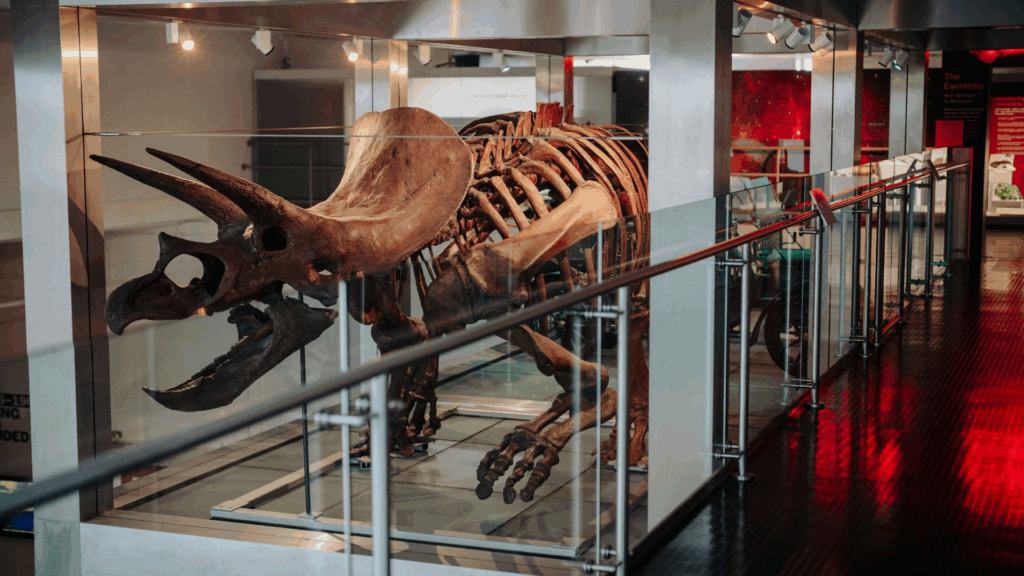
The dinosaur corner – including Ireland’s only known dinosaur fossil bones, a small but proud claim to fame.
Stuffed animals & birds – classic museum fare, but arranged to tell stories about habitats and extinction rather than just lining things up in cases.
Rocks, minerals and fossils – from sparkling crystals to chunks of meteorite.
Irish wildlife & coastline – great for kids who like “eww” moments with creepy-crawlies, shells and specimens in jars.
Ulster Museum’s collections are rooted in serious scientific work – there’s a huge herbarium and extensive zoological collections behind the scenes – but the public galleries are very hands-on and family-friendly.
Art & Design: Irish Masters and Global Voices
The art galleries shift the mood again: quiet rooms, polished floors, and that hush you automatically adopt around paintings.
The collection is strong in:
Modern Irish and Ulster artists, built up steadily since the 1940s.
Contemporary art and temporary exhibitions, often tackling themes like identity, migration, or environmental change.
Fashion and textiles, rebuilt after a devastating fire in the 1970s destroyed much of the original costume collection. The museum used compensation to acquire couture pieces from designers like Chanel, Dior, Alexander McQueen and Vivienne Westwood, alongside everyday fashion.
You can walk from a 19th-century landscape to a sharp, modern installation in a few steps. It’s a nice counterpoint to the heaviness of some of the historical material downstairs.
The Visit: Practical Vibe
A few things that make Ulster Museum especially easy to recommend:
Location: Right in Botanic Gardens, so you can pair a museum visit with a wander through the Palm House, Tropical Ravine or just a picnic on the grass.
Neighbourhood: It sits in the Queen’s Quarter, with Queen’s University and Methody as close neighbours, plus cafes, pubs and bookshops along Botanic Avenue and Stranmillis Road.
Cost: General admission is free, with charges only for certain special exhibitions or events.
Opening hours: Typically Tuesday–Sunday, 10:00–17:00, closed on Mondays – always worth checking the official site before you go in case of changes.
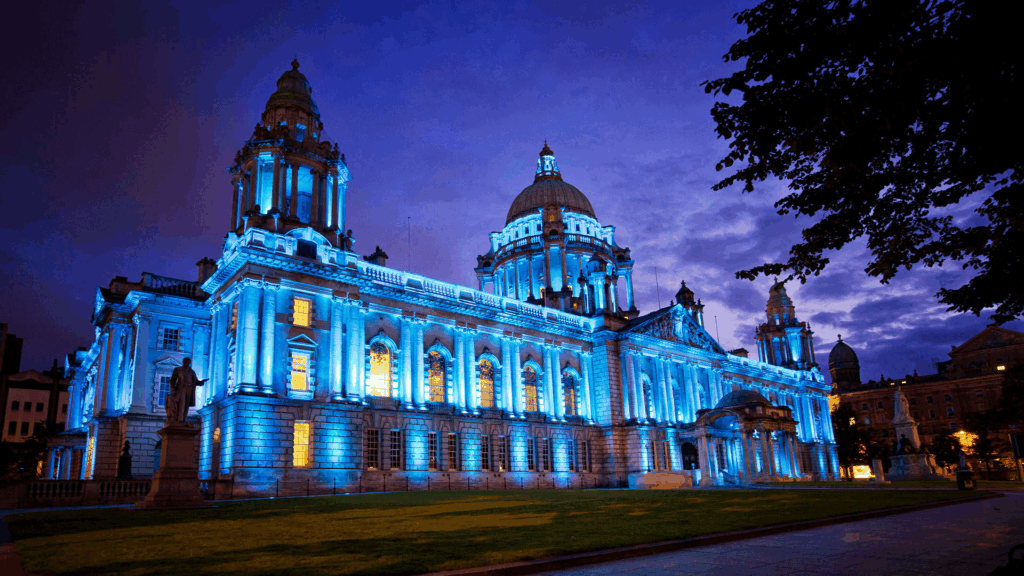
On Donegall Square, Belfast City Hall sprawls like an Edwardian “wedding cake” of Portland stone and copper—grand, symmetrical, and impossible to miss. Designed by Sir Alfred Brumwell Thomas, construction began in 1898 and finished in 1906, crowning the city’s new status as a bustling industrial capital.
City Hall replaced the old White Linen Hall and signalled civic confidence during Belfast’s boom years. It has witnessed everything from royal visits to wartime blackouts and post-conflict celebrations. A major restoration closed the building in 2007–2009, renewing services and interiors (about £10.5 m across phases), before reopening to the public with refreshed tours and galleries.
Out on the lawns, memorials trace the city’s story: the Cenotaph to WWI dead and the Titanic Memorial Garden—opened on 15 April 2012—whose bronze plaques uniquely list all 1,512 victims of the disaster.
Quick Facts:
Architect & style: Sir Alfred Brumwell Thomas, Baroque Revival/Edwardian grandeur.
Built: 1898–1906; cost: ~£360–369k (then).
Dome: ~173–174 ft (53 m), copper-clad; corner towers on all four sides.
Materials: Portland stone exterior; rich marbles inside.
Today: HQ of Belfast City Council; free public exhibition, tours, and café (“The Bobbin”).
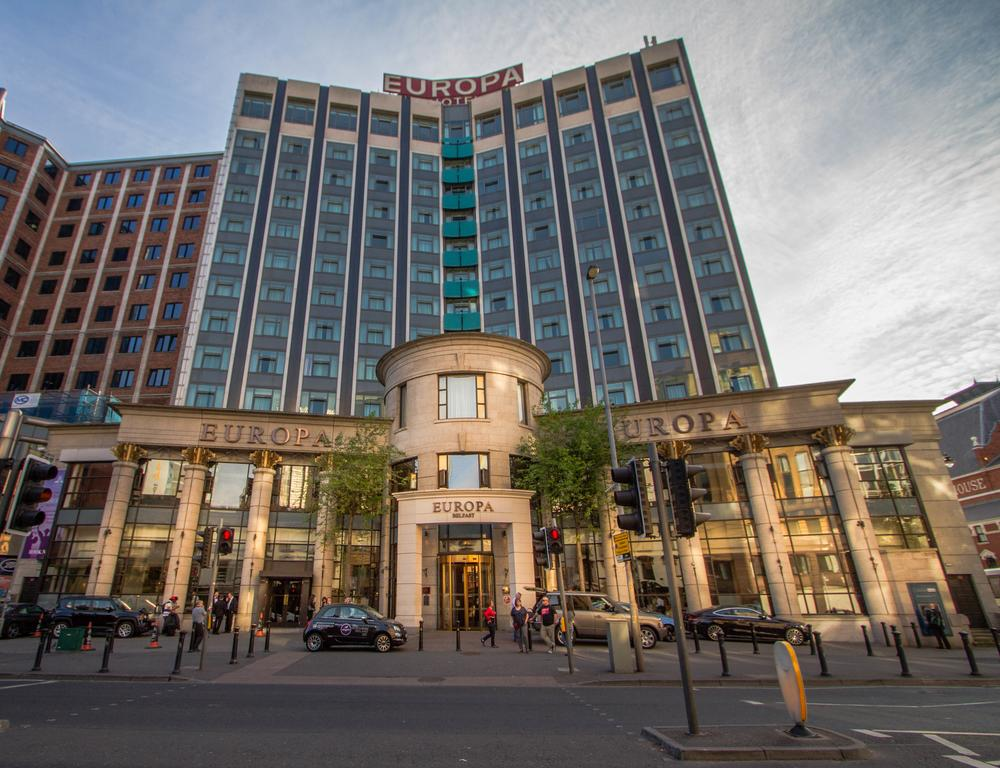
On Great Victoria Street, the Europa Hotel rises like a silvered time capsule of Belfast’s grit and charm. Opened in 1971 on the site of the old Great Northern Railway terminus, the 12-storey, 51 m tower by Sydney Kaye, Eric Firkin & Partners became a front-row seat to history—and a city-centre beacon again today.
Quick Facts:
Opened: July 1971; Architects: Sydney Kaye, Eric Firkin & Partners.
Height / floors: ~51 m, 12 storeys.
Rooms: 272 (after later extensions/refurbs).
Famous claim: Often described as the “most bombed hotel”—accounts vary, with sources citing ~28–33 attacks during the Troubles.
From Troubles to turnaround
Journalists made it their base through the worst years, but the hotel kept trading, then found a second life when Hastings Hotels bought it in 1993, invested ~£8 m and reopened in 1994. In November 1995, President Bill Clinton stayed here (110 rooms were booked for the entourage); the penthouse suite he used became the Clinton Suite. Recent years brought a five-year, £15 m refurbishment across all 272 rooms, bars, and meeting spaces—sealing the Europa’s status as a polished city landmark.
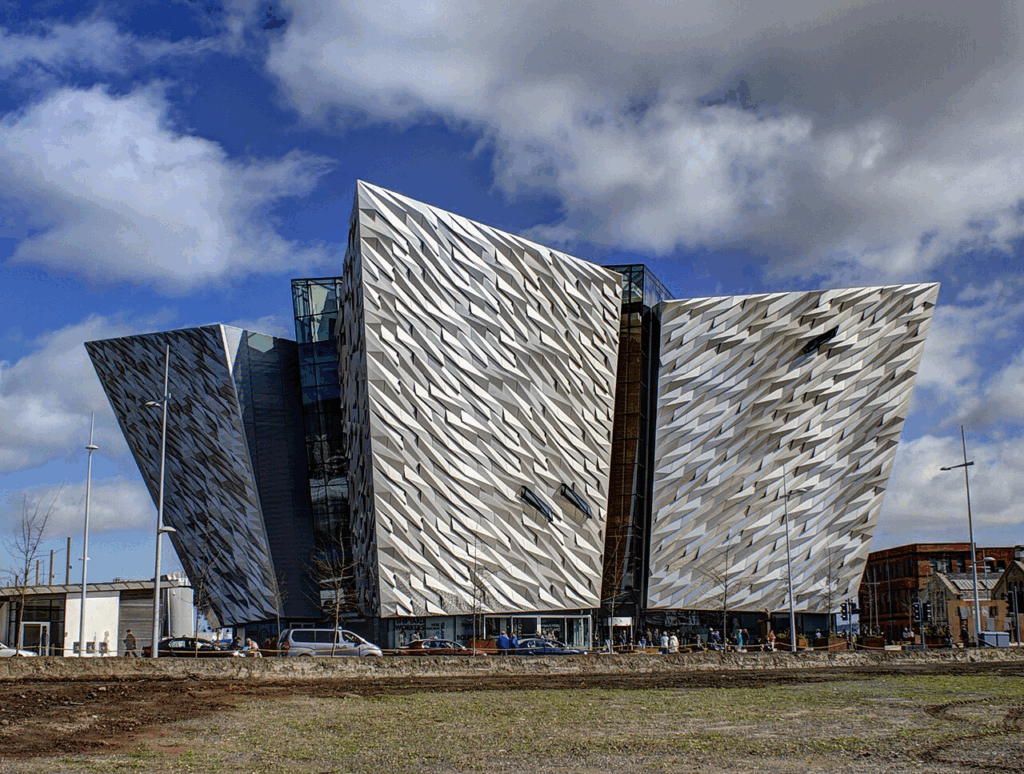
On the old Harland and Wolff slipways, Titanic Belfast lifts four glittering “prows” into the sky—part ship, part iceberg, all theatre. Conceived by CivicArts / Eric R. Kuhne and Associates and delivered with Todd Architects, the 8-storey landmark opened for the centenary in March 2012 and has since become Belfast’s postcard icon.
Quick facts:
Where and when: Titanic Quarter, on the very ground where RMS Titanic and Olympic were built; ground broke in 2009, doors opened 31 March 2012.
Architects: Concept by CivicArts / Eric R. Kuhne & Associates; lead consultants Todd Architects.
Height and scale:38.5 m (126 ft) at the peak, roughly the height of Titanic’s hull; around 12,000–14,000 m² of floorspace.
Cladding: ~3,000 anodised aluminium “shards,” about 2,000 unique; ~6,200 m² of rainscreen.
Cost: ~£101 million.
Awards:World’s Leading Tourist Attraction (2016) at the World Travel Awards; also Europe’s Leading Visitor Attraction that year.
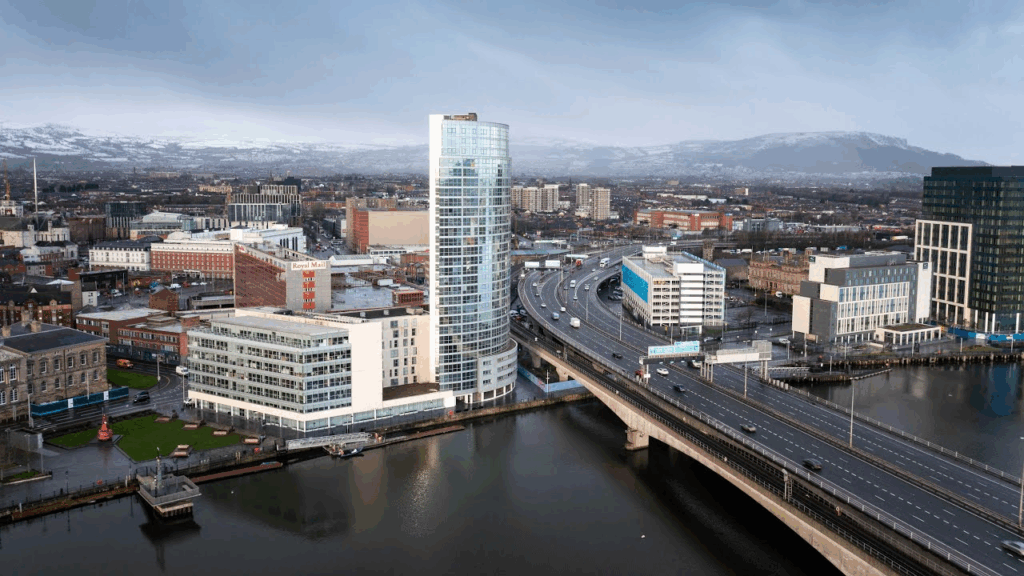
On Donegall Quay where the Lagan meets the city, the Obel Building lifts a glassy curve into Belfast’s skyline. Completed in 2010–2011, it stands about 85 m tall with 28 storeys, making it the tallest building in Belfast (and on the island of Ireland). The scheme was designed by Broadway Malyan, with residential apartments stacked above ground-floor retail and a separate office element.
The project launched in the mid-2000s boom, hit the brakes in the financial crisis, then crossed the finish line around 2011. Soon after opening, Allen & Overy took the available office space; the residential tower later went through administration in 2012 before being acquired in 2014 and refurbished in 2016. Today it anchors the revitalised waterfront, a modern counterpoint to the Lagan Weir and the bridges beside it.
Quick facts:
Height / floors: ~85 m, 28 storeys.
Where: 62 Donegall Quay, right on the River Lagan.
Use: Mostly residential, with offices and ground-floor units.
Architect: Broadway Malyan.
Claim to fame: Tallest building in Belfast and Northern Ireland (and widely cited as tallest in Ireland).
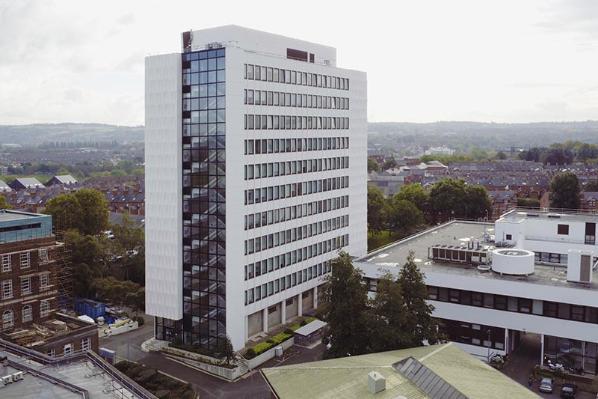
On Stranmillis Road, a crisp white tower rose in the 1960s. Manchester firm Cruickshank & Seward drew it in 1960; by 1965 the reinforced-concrete frame wore an Antrim limestone skin, and in 1966 the doors finally opened.
It took its name from Sir Eric Ashby — the reforming vice-chancellor who led Queen’s through a building boom and, fittingly, performed the opening ceremony.
Since then the Ashby has been an engine-room of the university: eleven storeys of labs, lecture theatres and research groups, home to Mechanical & Aerospace Engineering and EEECS, with the Advanced Micro-Engineering Centre perched on the 10th floor.
A major £26 million refurbishment between 2010–2013 polished (but didn’t tame) its modernist lines; in 2018 it was graded B+ as one of Northern Ireland’s best large in-situ concrete buildings — a true South Belfast landmark.